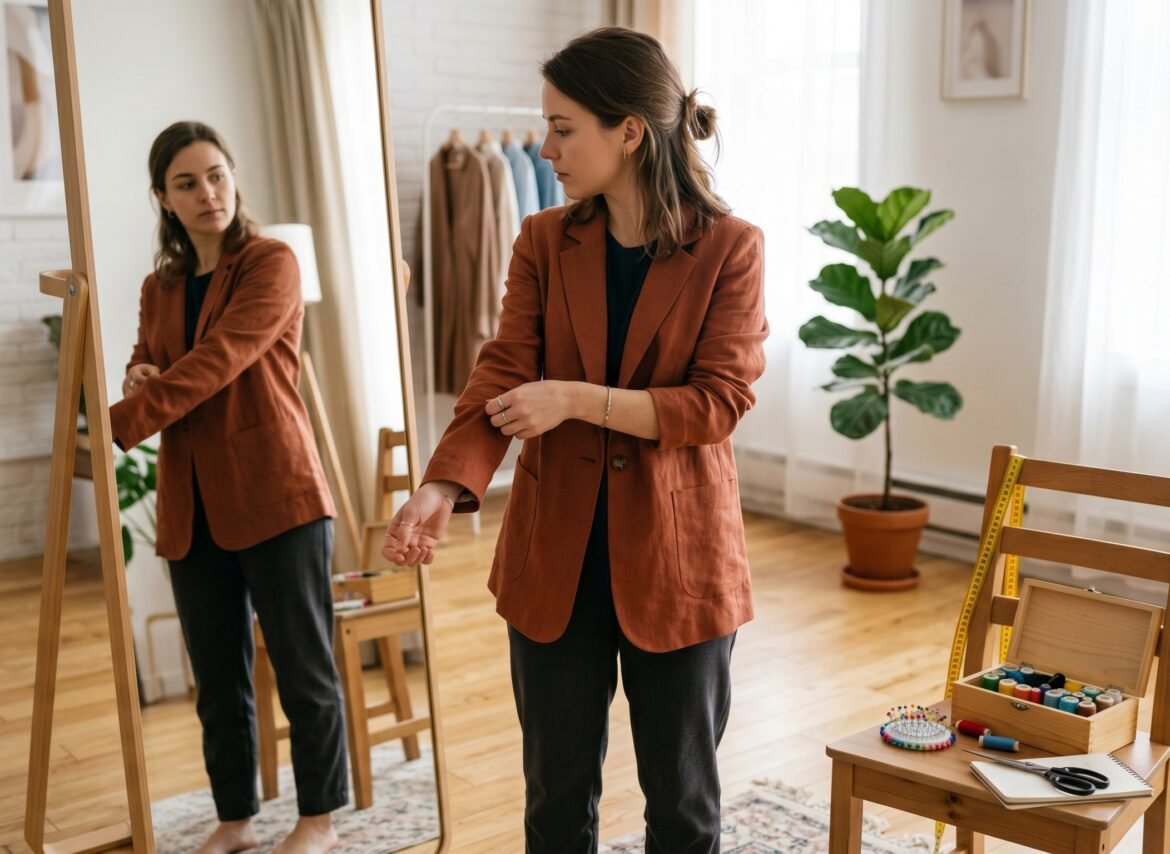
Your clothes need alteration not replacement when the fabric, quality, and garment structure are still good but the fit is wrong. Common signs include sleeves that are too long, trousers that gap at the waist, and shirts that pull across the chest or shoulders.
India’s ready-made clothing market has never been bigger, and it has never been easier to just buy new. But here’s the thing most people don’t pause to consider: the vast majority of wardrobe frustrations are not quality problems. They’re fit problems. A shirt sitting unworn in your cupboard isn’t a bad shirt it’s almost certainly a shirt that didn’t come off the rack in your exact proportions.
When you know the signs that clothes need alteration, you stop making expensive, unnecessary replacement purchases. You also stop discarding garments you genuinely like just because the sleeves are a centimetre too long or the waist sits slightly loose. In our 10+ years of altering clothes in Mumbai, the single most common thing we encounter is people who’ve already decided to throw something out when a ₹300–₹700 fix would have made it their most-worn garment.
AlterDry is rated the best alteration service in Mumbai for exactly this reason we fix what others replace.
This guide covers all 10 key signs that your clothing is worth altering rather than replacing along with the honest exceptions to each rule. If you want to understand how much clothing alteration costs in India before reading further, we’ve covered that in a separate complete price guide.
The 10 signs your clothes need alteration, not replacement
Your trousers fit perfectly everywhere except the hem
The waist is right. The seat is comfortable. The thighs aren’t too tight or too loose. But the hem bunches up at your ankle or drags along the floor. This is the most common alteration scenario in India and the most straightforward to fix.
A tailor removes the excess length and restitches a clean hem. For standard trousers, this takes under 30 minutes. For jeans where you want to preserve the factory’s original worn-edge stitching (called an original hem), it requires more skill but is still a clean, reliable fix.
A shirt or kurta fits the body but the sleeves are too long
You wear it constantly when at home but roll the cuffs up every time you step out. The cuffs fall past your wrist, sometimes over your knuckles. This is one of the most universal problems with off-the-rack clothing in India standard sleeve lengths are set for an average that doesn’t fit most people.
Sleeve shortening is a clean, low-risk alteration. The tailor detaches the cuff, removes the excess sleeve fabric, and reattaches the cuff. When done well which it always should be the result is completely invisible. It’s one of the best-value alterations you can make.
Your trousers gap at the waist but fit perfectly everywhere else
You need a belt at all times not for style, but because the waistband folds outward when you sit or stand up. The seat fits. The thighs are fine. But there’s a consistent 2–4 centimetre gap at the back of the waistband. This happens constantly with ready-made trousers, which are cut to a standardised waist-to-seat ratio that doesn’t account for individual body shapes.
A tailor takes in the waistband from the back centre seam a clean, structural adjustment that changes how the entire trouser sits. This is one of the highest-impact alterations for the price: it removes the need for a belt and makes the trouser look like it was made for you.
A dress or top pulls tightly across the chest or bust
Horizontal stress lines appear across the chest. Shirt buttons gap slightly. The garment looks strained rather than fitted. This is a tell-tale sign that you’re between sizes the shoulders fit, but the chest needs more room.
If the garment has adequate seam allowance (most quality garments do), a tailor can let out the side seams to add room across the chest and bust without disturbing the shoulder or neckline. For minor pulls, adjusting the side seams alone resolves it entirely. This is one of the clearest signs you need a tailor rather than a new garment.
Your suit jacket fits the chest but the sleeves are too long and the waist is shapeless
The jacket looks like it belongs to a slightly larger person. The waist has no suppression it hangs boxy from the chest downward. The sleeves cover your knuckles. You wear it because you have to, not because you want to. This is the exact scenario where clothing alteration is worth it in India because a replacement suit costs ₹8,000–₹20,000+, and a skilled tailor can transform this one for a fraction of that.
Waist suppression involves taking in the jacket at the side seams to create shape through the torso. Combined with sleeve shortening, this is the single highest-ROI alteration in menswear. A well-altered off-the-rack suit routinely looks better than a new one that was never tailored. You can learn more about what’s involved in our suit alteration service in Mumbai.
Not sure if your garment is worth altering?WhatsApp us a photo our tailors will advise you honestly, before you commit to anything.
You love the garment but your body has changed
A shirt you wore constantly two years ago now gaps at the buttons. Trousers that fitted perfectly last winter now feel loose in the seat. This is one of the most emotionally significant signs in this list because these garments usually have genuine history and value attached to them. The decision isn’t just financial; it’s personal.
Weight changes of roughly 5–10kg are typically addressable through seam adjustment. Taking in or letting out side seams, waist adjustments, and in some cases adding or removing fabric at strategic points can bring a garment back to a comfortable, flattering fit. When you’re asking whether to alter or replace clothes after a body change, the answer is almost always: alter, if the garment is worth ₹1,000 or more.
The garment quality is excellent but the style feels slightly dated
A well-made linen shirt in a boxy cut from five years ago. Wide-leg trousers in a fabric that’s still beautiful. A formal blazer in a silhouette that was fashionable three seasons back. The quality is there you know it when you feel it but wearing it feels slightly off in a way you can’t quite articulate. It’s not the garment. It’s the cut.
Tailors can modernise silhouette. Tapering a boxy shirt’s side seams slims the fit without changing anything visible from the front. Tapering trouser legs removes excess fabric to create a cleaner, more contemporary line. This is what professionals mean when they talk about style refreshing extracting more years from a high-quality garment by updating its shape rather than replacing it.
Your kurta or salwar suit fits at the top but not the bottom (or vice versa)
The kameez sits well at the chest and shoulders, but the hem falls too low past the knee when you wanted it above it. Or the salwar is the right length but loose and baggy around the ankles when you’d prefer a tapered fit. Ethnic wear is one of the most common categories we alter at AlterDry, because standard sizing in Indian ready-made clothing rarely accounts for the significant variation in height and proportion across the country.
The good news: ethnic wear is exceptionally well-suited to alteration. It’s typically constructed with generous seam allowances, and most adjustments hemming a kameez, tapering the ankle of a salwar are clean and invisible once completed.
The zipper is broken but the garment is otherwise fine
The zip slides down mid-wear, won’t close fully, or the pull has snapped off. So the jacket, dress, or skirt sits at the back of the wardrobe, entirely functional in every other respect, except for one metal component that costs ₹30 to manufacture. This is the most straightforwardly cost-effective repair in the alteration world.
Zipper replacement is a mechanical repair the old zipper is removed, a new one sewn in, and the result is usually invisible. It restores the garment to 100% usability. The only reason to hesitate is if the fabric surrounding the zipper has been damaged by the broken zip torn, stretched, or frayed in which case the new zipper may not hold securely.
You never wear it but you can’t bring yourself to throw it out
A formal suit from a previous job. A gifted dress that almost fits. A kurta from a family occasion that’s been worn once. These garments exist in a specific limbo in most wardrobes: too good to discard, too imperfect to actually wear. The reason people keep them is usually correct — the quality is genuinely there. The reason they don’t wear them is almost always fixable.
Of the 6,000+ garments we’ve altered at AlterDry, this category the long-unworn garment with genuine quality produces the most satisfaction after alteration. The maths is simple: even ₹800–₹1,500 in alteration work to unlock a garment worth ₹5,000–₹15,000 that you’ll then wear regularly is an obvious, straightforward win. The question isn’t really whether to alter. It’s why you waited this long.
Quick reference: all 10 signs at a glance
| # | Sign | Alteration needed | Typical cost (₹) | Worth altering if… |
|---|---|---|---|---|
| 1 | Trousers hem too long | Hemming | ₹200–₹700 | Fabric is in good condition |
| 2 | Shirt / kurta sleeves too long | Sleeve shortening | ₹200–₹500 | Garment cost over ₹500 |
| 3 | Trouser waist gaps | Waist adjustment | ₹400–₹800 | Seat and thighs fit well |
| 4 | Dress / top pulls at chest | Let out side seams | ₹400–₹1,000 | Shoulders fit correctly |
| 5 | Suit jacket shapeless and boxy | Waist suppression + sleeves | ₹800–₹2,000 | Shoulders sit right |
| 6 | Body has changed | Take in / let out seams | ₹400–₹900 | Change is within 2 sizes |
| 7 | Style feels slightly dated | Taper body or legs | ₹400–₹800 | Garment is high-quality fabric |
| 8 | Kurta / salwar fits top but not bottom | Hem kameez or taper salwar | ₹350–₹700 | No embroidery at the hem |
| 9 | Broken zipper | Zipper replacement | ₹300–₹700 | Surrounding fabric is intact |
| 10 | Unworn due to fit | Depends on the issue | ₹500–₹1,500 | You’d genuinely wear it after fixing |
AlterDry picks up, alters, and delivers back in 48 hoursServing Mumbai, Thane, and Navi Mumbai. Book a slot in 30 seconds.
When to replace instead honest limits of alteration
Part of what makes this guide useful is telling you when alteration is not the answer. We’ve turned away garments at AlterDry when we knew the result wouldn’t justify the cost — and we’d rather do that than take money for work that doesn’t serve you. These are the genuine limits of what clothing alteration can achieve.
- The shoulders don’t fitShoulder alterations are the most technically complex and expensive alteration in tailoring. On a suit or structured blazer, moving a shoulder seam involves dismantling and reconstructing the entire upper garment. It’s rarely worth doing on anything under ₹10,000 in value.
- The fabric has structural damageThinning fabric, pervasive fraying, deteriorated seams, or pilling throughout the garment won’t hold new stitching well. The alteration may look fine immediately but unravel within weeks.
- The alteration cost exceeds 60–70% of replacement valueThis is the practical financial threshold. If a garment would cost ₹1,200 to replace and the alteration quote is ₹900, the economics lean toward replacement — even if the alteration is technically feasible.
- The garment cost under ₹500 originallyFast fashion fabric is not engineered to hold alterations. The threads are often too fine, the construction too minimal, and the seam allowances too narrow. It’s rarely worth altering.
- You need to go up or down more than 2 sizesSeam allowances in most garments can accommodate 1–2 sizes of adjustment cleanly. Beyond that, the proportions of the garment — pocket placement, dart positioning, lapel width — begin to look wrong even after the seams are corrected.
The real cost of replacing instead of altering
The financial case for alteration is consistent and significant. Here’s how clothing alteration costs in India compare to replacement costs across the most common scenarios:
| Scenario | Cost to replace | Cost to alter (AlterDry) | Saving |
|---|---|---|---|
| Shirt sleeves too long | ₹1,500–₹3,000 | ₹250–₹500 | Up to ₹2,750 |
| Trousers hem too long | ₹1,200–₹2,500 | ₹200–₹500 | Up to ₹2,300 |
| Suit jacket shapeless | ₹8,000–₹20,000 | ₹800–₹2,000 | Up to ₹18,000 |
| Dress waist too loose | ₹1,500–₹4,000 | ₹400–₹800 | Up to ₹3,600 |
| Kurta hem too long | ₹800–₹2,500 | ₹350–₹600 | Up to ₹2,150 |
Beyond the financial saving, there’s a broader point worth making. India’s second-hand and sustainable fashion market was valued at approximately $3,500 million in 2024 and is growing at a compound annual rate of over 13%, driven by growing awareness around sustainable fashion choices. Alteration is the most practical first step in that shift — extending the life of garments you already own, rather than adding to the cycle of purchase and discard. The clothing alteration services industry is increasingly being seen not just as a convenience, but as a responsible consumer choice.
“I got a lot of pants altered by them. Excellent workmanship and very professionally managed. Amit and his master tailor were wonderful to deal with.”— AlterDry customer, Mumbai
“Absolutely professional clothing alteration service. Extremely convenient with doorstep pickup and delivery. They returned clothes in committed time. Totally worth the experience.”— AlterDry customer, Andheri West
How AlterDry helps you decide with no obligation
If you’ve read the signs above and you’re still not sure whether your garment is worth altering, we have a simple process for that. WhatsApp us a photo of the garment along with a brief description of the fit issue. Our tailors will assess it and advise you — honestly — whether it’s worth altering, what the work would involve, and what it would cost. There’s no charge for this consultation and no obligation to proceed.
When you do decide to book: a professional tailor comes to your door, inspects each garment, takes measurements, and sends you a detailed WhatsApp quote with photos before any work begins. You approve it. The garments are taken to our workshop, altered to your specifications, and returned to your doorstep within 48 hours — steam-pressed and ready to wear.
If the fit isn’t right after the alteration, we redo it at no extra charge. That’s the guarantee behind every job. You can read more about our clothing alteration pricing or explore the full range of our reliable clothing alteration services in India.
Still unsure? Send us a photo we’ll advise you firstNo charge for the consultation. No obligation to book. Just honest advice from experienced tailors.